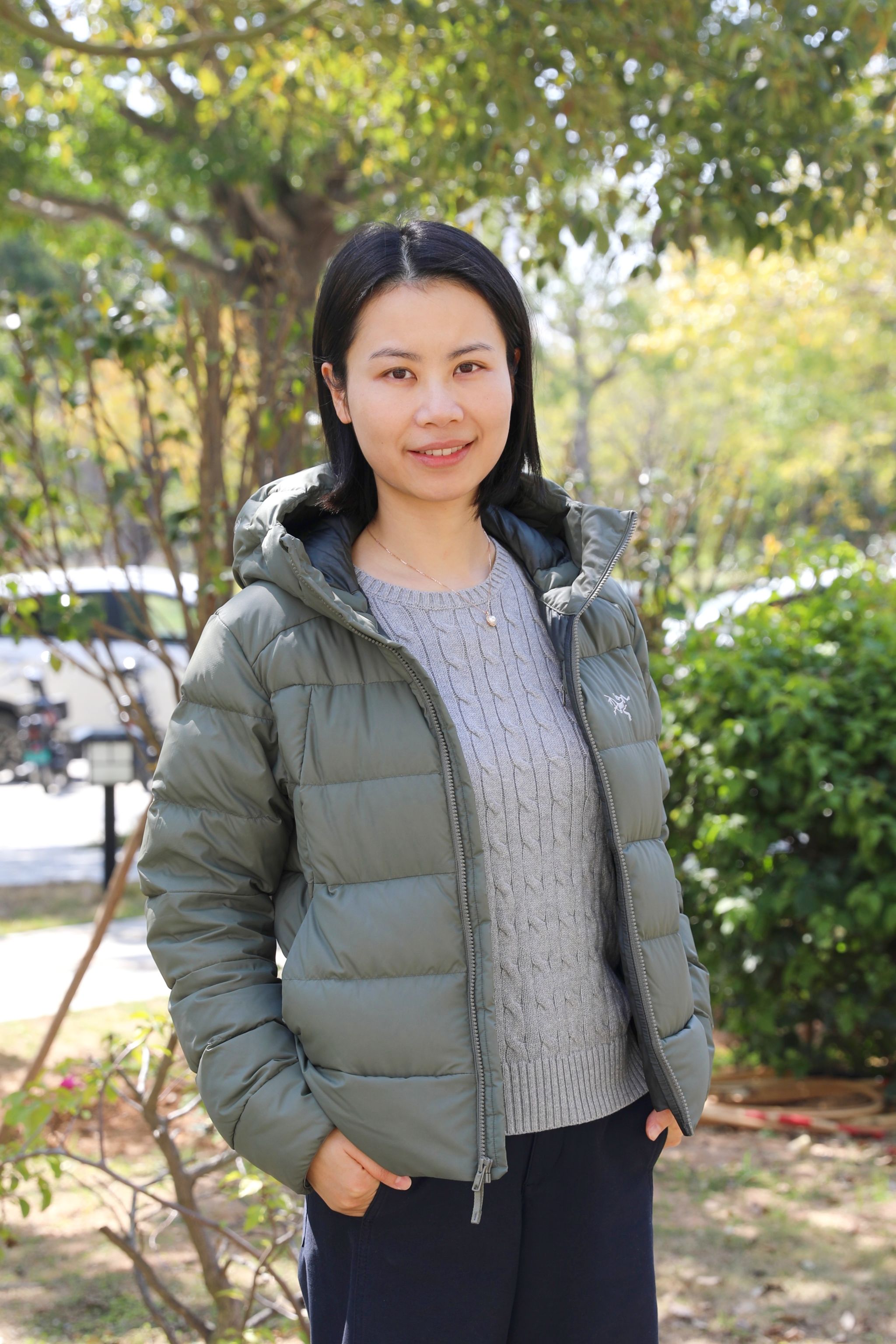
| Jieming Li, Ph.D. Associate Professor. E-mail: jieming.li@xmu.edu.cn |
Education
2013 June, B.S. , Xiamen University, Chemistry;
2019 May, Ph.D. , University of Michigan, Chemistry;
Professional Experience
2019 Feb- 2026 Jan, post-doc, Senior Scientist, Principal Scientist, Bristol Myers Squibb;
Associate Professor, School of Life Sciences, Xiamen University, 2026
Research Area
Single-molecule microscopy (e.g., Single-Molecule Fluorescence Microscopy, SMFM) has emerged as a transformative tool in unraveling intricate molecular processes. By removing the limitations imposed by ensemble averaging, it allows for the direct observation of transient intermediates and rare biomolecular dynamics at the nanoscale and millisecond time scales that would otherwise be masked. Our research group is dedicated to synergizing cutting-edge Artificial Intelligence (AI) and single-molecule technologies. We aim to develop generalizable, scalable, and automated "meta-tools" to overcome the poor adaptability, high labor costs, and user bias inherent in traditional single-molecule data analysis. By doing so, we strive to accurately unveil transient dynamics in complex biological and nanotechnology systems. Furthermore, we are pioneering human-in-the-loop AI agents to fully automate data-driven scientific discoveries.
Core Research Areas:
1. Deep Learning Foundation Models for Single-Molecule Analysis To address the challenges of low signal-to-noise ratios and high heterogeneity in single-molecule data, we have developed a suite of advanced deep learning frameworks (e.g., META-SiM, Kin-SiM, and AutoSiM). By leveraging Transformer-based foundation models and multi-task pretraining, we achieve fully automated trace classification, segmentation, idealization, and kinetic extraction. These tools operate orders of magnitude faster than manual analysis while maintaining expert-level accuracy, successfully facilitating the discovery of rare, previously undetected biomolecular states, such as novel pre-mRNA splicing intermediates.
2. Single-Molecule Biophysics and Nucleic Acid Nanotechnology Utilizing high spatiotemporal resolution techniques like smFRET and single-particle tracking, we explore complex molecular interactions at the nanoscale. Representative work includes probing the kinetic speed limits of DNA molecular machines and optimizing Single-Molecule Recognition through Equilibrium Poisson Sampling (SiMREPS) for highly specific, amplification-free nucleic acid biosensing, providing new strategies for early molecular diagnostics.
3. Next-Generation AI Agents for Scientific Discovery To democratize advanced single-molecule analytics, we are developing a forward-looking, LLM-powered Dual-Agent architecture. By orchestrating a "Machine Learning Agent" for foundation model training and a "Data Science Agent" for raw data interpretation, this system automatically generates customized analytical tools tailored to diverse experimental setups, significantly accelerating the extraction of scientific insights.
Selected Publications
1.Li, J. #*, Zhang, L.#, Johnson-Buck, A., & Walter, N. G.* (2025). Foundation model for efficient biological discovery in single-molecule time traces. Nature Methods, 22(10), 2149-2160.
2.Zhang, L#., Li, J#*. and Walter, N.G.*, (2025). Pretrained deep neural network Kin-SiM for single-molecule FRET trace idealization. The Journal of Physical Chemistry B, 129 (4), 1167-1175.
3.Song, D.; Zhang, X.; Li, B.; Sun, Y.; Mei, H.; Cheng, X.; Li, J.*; Cheng, X.*; Fang, N.* (2024) Deep learning-assisted automated multidimensional single particle tracking in living cells. Nano Letters, 24 (10), 3082-3088.
4.Yang, M.; Mansour, N.; Huang, T.; Heffer, D.; Pei, Y.; Huang, W.; Li, J.*; Dong, B.*; Fang, N.* (2024). Reaction Initiated Single Molecule Tracking of Mass Transfer in Core-Shell Mesoporous Silica Particle. Analytical Chemistry, 96 (6), 2500-2505.
5.Huang, Y., Hu, Y., Yuill, E. M., Marriott, A. S., Chadwick, J., Li, J., ... & Miller, S. A. (2022). Circumventing glass vial and diluent effects on solution stability of small molecule analytes during analytical method development and validation. Journal of Pharmaceutical and Biomedical Analysis, 213, 114676.
6.Yuill, E. M., Ileka, K. M., La Cruz, T. E., Li, J., Shackman, J. G., Tattersall, P. I., & Zang, J. (2021). Leveraging AQbD Principles for Development of Challenging Drug Substance Stability-Indicating Methods. Organic Process Research & Development, 25(6), 1431-1439.
7.Li, J. #, Zhang, L. #, Johnson-Buck, A., & Walter, N. G. (2020). Automatic classification and segmentation of single-molecule fluorescence time traces with deep learning. Nature Communications, 11(1), 1-11.
o National Cancer Institute’s Epidemiology and Genomics Research Program (EGRP) Research Highlights for 2020 (link).
8.Johnson-Buck, A. #, Li, J. #, Tewari, M., & Walter, N. G. (2019) A guide to nucleic acid detection through single molecule kinetic fingerprinting”, Methods 153, 3-12
9.Li, J. #, Johnson-Buck, A. #, Yang, Y. R., Shih, W. M., Yan, H., & Walter, N. G. (2018) Exploring the speed limit of toehold exchange with a cartwheeling DNA acrobat. Nature Nanotechnology 13(8), 723–729.
o Highlighted on Nature: “Gymnastic feats help DNA ‘walker’ set speed record” DOI: 10.1038/d41586-018-05127-8
o Highlighted on Nature Reviews Materials: “Head over heels”. 3, 155 (2018).
10.Lin, H. #, Li, J. #, Liu, B., Liu, D., Liu, J., Terfort, A., ... & Ren, B. (2013). Uniform gold spherical particles for single-particle surface-enhanced Raman spectroscopy Physical Chemistry Chemical Physics, 15(12), 4130-4135
Honors and award
2016 Chemistry Department Fellowship, University of Michigan
2016 Student Travel Award funded by IUPAB for the Biophysical Society Meeting, Biophysical Society
2015 Future Faculty Graduate Student Instructor Fellowship, University of Michigan
2011 China National Endeavor Scholarship, Xiamen University
